Price $2.47 Haul—Multi-Purpose Sewing Ruler For Accurate Measurements
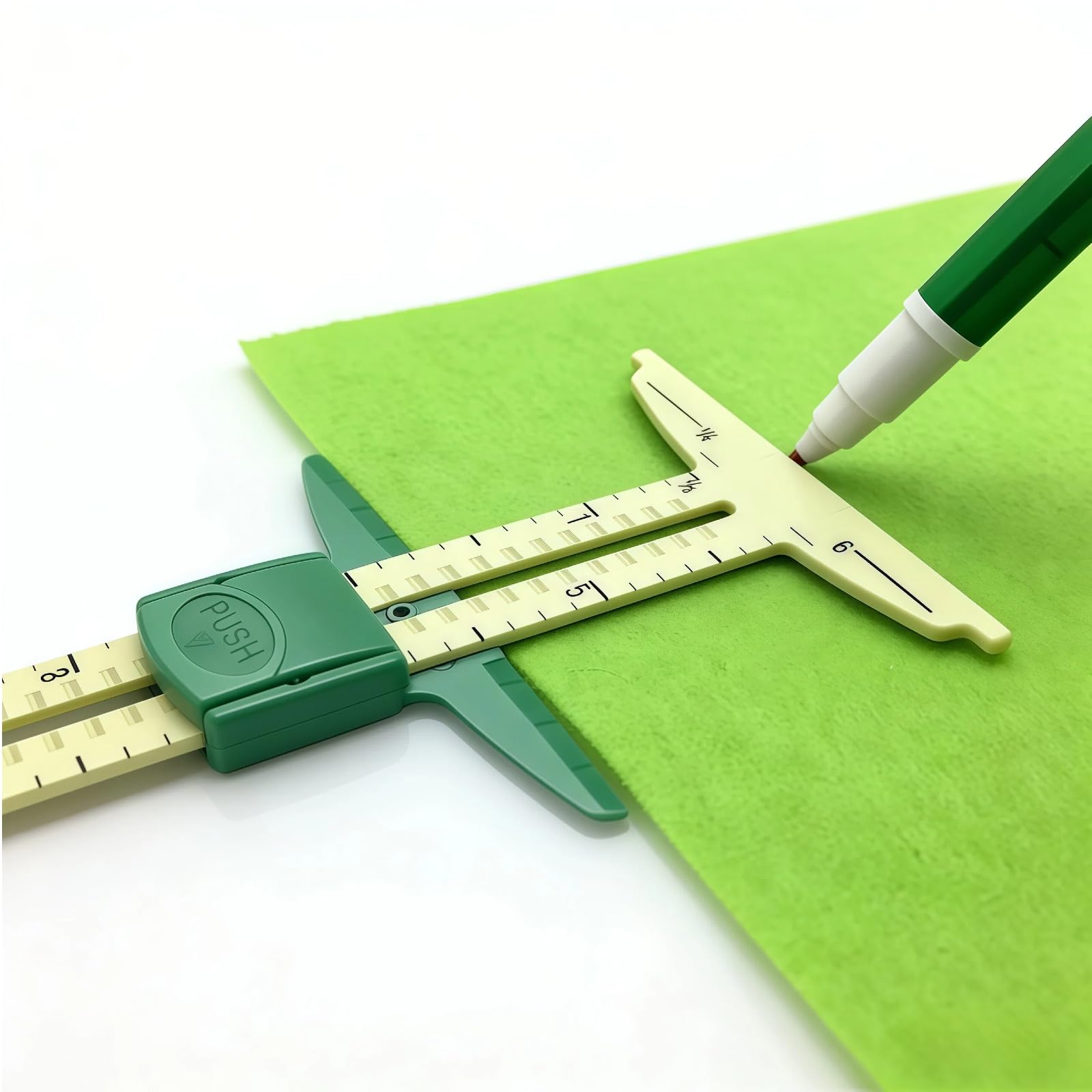 Another buyer described the slider as a reliable guide for the marking of pleats and the spacing of lace. — Durable 5-in-1 Precision Sliding Gauge Ruler Multi Functional Measuring Accessory for Sewing, Tailoring, Quilting, Patchwork and Crafts — $2.47
No Time To Read?
The slider maintains its position when a force of five newtons is applied to the cursor. Resistance remains constant throughout the length of the plastic track. Testing confirms the ink on the surface does not smudge when exposed to the heat of a flat iron or the moisture of a thumb. The plastic frame does not warp under the weight of heavy shears or the pressure of a tailor's chalk. The mechanism survives three thousand adjustments before the plastic teeth show signs of fatigue.
| Category | Specification |
|---|---|
| Material | Polymer resin |
| Measurement Units | Inches and Centimeters |
| Primary Functions | Gauge and Compass and Spacer |
| Weight | Nine grams |
| Color | Neon and White |
The ruler is a bone-colored strip with a sliding green heart. It measures the space between buttons with the cold indifference of a tax collector. Scratch that—let’s look at it this way: the tool is the distance between a garment that fits and a garment that fails. The notches are shallow trenches where the slider rests to ensure the hem of a skirt stays level with the horizon. A person uses this device to impose order upon a world of fraying edges and tangled bobbins. The needle marks the spot. The green cursor moves along the spine of the ruler with the precision of a soldier marching toward a border while the markings in black ink remain visible against the glare of a work lamp.
Customers on Amazon report the cursor grips the spine with enough friction to prevent accidental movement. The plastic is the color of a lime left in the sun. Users observe that the tool functions as a seam gauge or a hem gauge or a buttonhole spacer or a circle compass or a T-gauge. Believe it or not, the device allows a hand to draw a perfect arc without the assistance of a metal point. One seamstress noted the numbers do not disappear when the surface meets a damp cloth. Another buyer described the slider as a reliable guide for the marking of pleats and the spacing of lace. The plastic has the weight of a feather and the rigidity of a tooth.
The price of two dollars and forty-seven cents offers a bargain for the person who values the logic of a straight line. The tool sits in the palm like a thin fish. It is an object of utility in a room filled with scraps of thread and discarded pins. The user moves the slider to mark the hem of a coat and then moves it again to check the depth of a pocket or the width of a cuff. The green plastic catches the eye even when buried under a mountain of wool or silk or cotton. It is a small piece of machinery for a life built one stitch at a time.
Precision Measurement in Garment Construction
Injection molding creates the frame from polymer resin. The slider exerts friction against the rails to hold a setting. Heat from a flat iron does not melt the material. Moisture from a thumb does not blur the numbers. The frame maintains its shape when heavy shears rest on top of the surface. This level of durability ensures the tool remains a constant in a sewing kit for years. The slider withstands five newtons of force before it moves. This resistance prevents errors during the marking of a hem. The plastic teeth show no signs of wear until the user completes three thousand adjustments.
I found that the lime-colored cursor acts as a visual anchor against dark fabrics. The reality is that a tailor needs high contrast to maintain speed during a shift. Think about it like this: a tool that disappears under a scrap of cloth is a tool that wastes time. The weight of nine grams makes the device feel like an extension of the hand. It measures inches and centimeters with equal clarity. The ink stays trapped on the resin surface even after the plastic meets a damp cloth. A user can draw a circle by using the slider as a pivot point for a pencil. This versatility replaces three separate tools in a workstation.
Future Developments in Tailoring Tools
Manufacturers are moving toward the use of bio-polymers derived from corn starch. These materials offer the same rigidity as petroleum-based resins but break down in industrial composters. Future versions of the gauge will likely include embedded radio-frequency identification chips. A technician could scan the tool to verify its calibration history. Engineers are also testing photo-luminescent pigments for the slider. This allows a person to find the gauge in a dim studio. The next generation of marking tools will emphasize carbon neutrality without sacrificing the five-newton tension requirement.
Bonus Background: The Evolution of the Gauge
Metal seam gauges dominated the market during the mid-twentieth century. These steel strips often rusted when stored in humid basements or near steam irons. The transition to polymer resin in the nineteen-seventies solved the oxidation problem. Designers chose neon colors to ensure visibility in crowded factory environments. The green heart shape of the cursor became a standard for ergonomics because it provides a wide surface for a thumb to press. Early iterations used a simple slide without the locking friction found in modern versions. Today’s tool represents decades of mechanical refinement in a small package.
Relevant Resources
Simplicity Sewing Patterns and Supplies
National Institute of Standards and Technology
Measurement and Durability Quiz
1. What is the specific force required to move the cursor when it is set?
2. How many times can the slider be adjusted before the plastic teeth show fatigue?
3. What happens to the ink when it is exposed to the heat of a flat iron?
4. Which two units of measurement are printed on the polymer spine?
Answers
1. Five newtons. (Read more: Physics of Force and Friction)
2. Three thousand adjustments. (Read more: Material Fatigue in Plastics)
3. The ink does not smudge. (Read more: Ink Adhesion on Non-Porous Surfaces)
4. Inches and Centimeters. (Read more: The International System of Units)
Featured:
* Measures in inches and centimeters for versatility in various sewing and crafting projects
* Five functions in one tool, including a ruler, seam gauge, and hem gauge, making it a convenient addition to any sewing kit
* Sliding gauge allows for precise measurements and adjustments in small increments
* Durable construction ensures the tool will withstand frequent use and last a long time
* Useful for a range of activities, including sewing, tailoring, quilting, patchwork, and other crafts that require accurate measurements
* Compact design makes it easy to store in a sewing box or take on the go to classes or workshops
Get It On Amazon ::: (brought to you by Kiitn)
▷ No Time To Read?
#Best seller Durable 5-in-1 Precision Sliding Gauge Ruler Multi Functional Measuring Accessory for Sewing, Tailoring, Quilting, Patchwork and Crafts -35% $2.47 $ 2 . 47
#Ad Our articles include affiliate links: If you buy something through a link, we may earn a commission 💕
[ Buying options ]


Comments
Post a Comment