Floral Mandala Tapestry Wall Hanging Cute,Boho Wall Tapestry For Bedroom Aesthetic,Flower Bohemian Living Room Decor For Teen Girls. Price $2.27 Haul
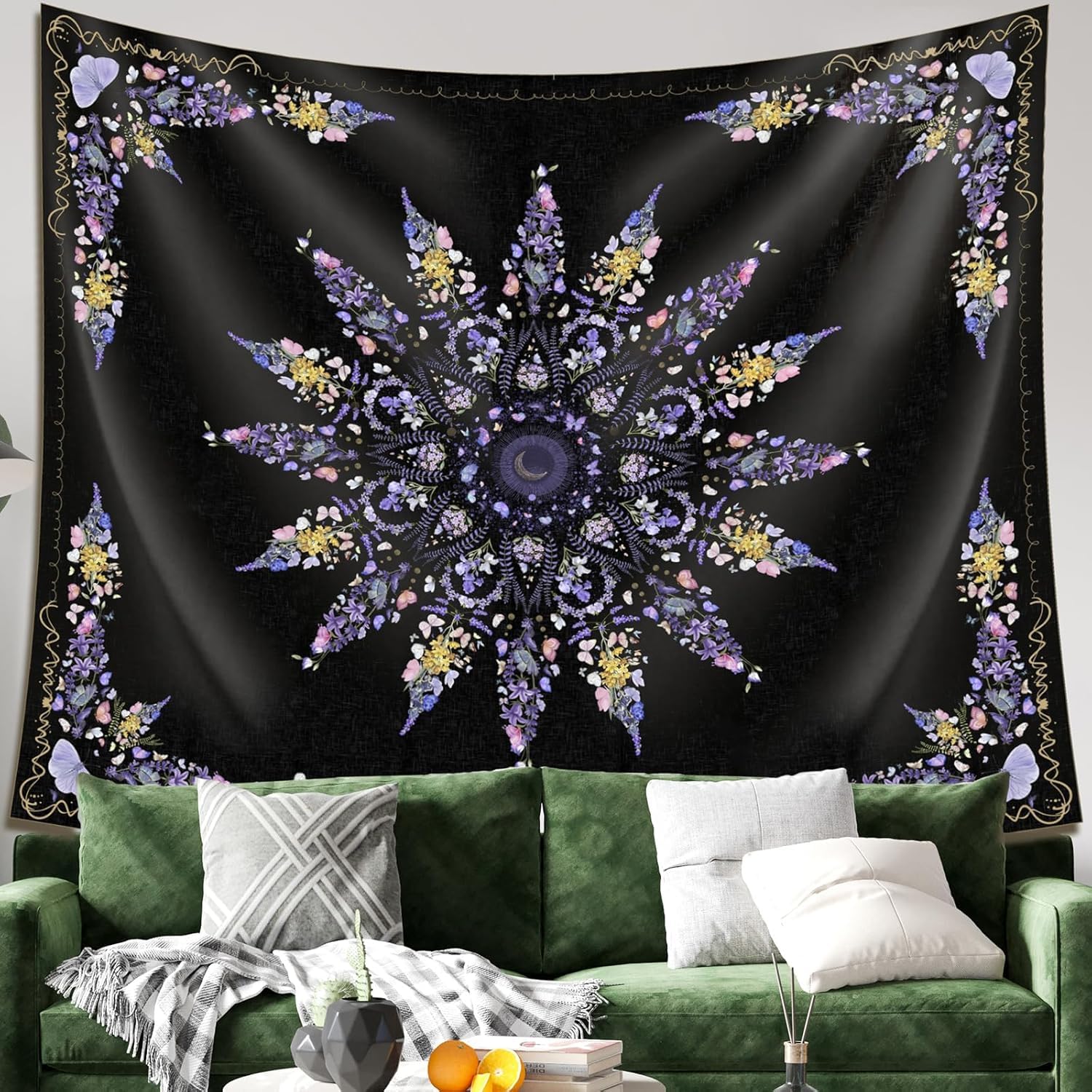 Timeline • 1941: Calico Printers' Association patents polyethylene terephthalate • — Floral Mandala Tapestry Wall Hanging Cute,Boho Wall Tapestry for Bedroom Aesthetic,Flower Bohemian Living Room Decor for Teen Girls — $2.27
No Time To Read?
Sublimation printing fuses the flower pattern into the synthetic fibers. Heat turns the ink into a gas. This gas sinks into the polyester core. No surface layer exists to peel away or crack over time. The machine applies pressure until the magenta petals become part of the material. Static electricity does not build up on the surface during the process.
A student in Tokyo fastened the cloth to a ceiling to create an artificial sky. The mandala centers the room and the geometry resembles the iris of an eye. Gravity exerts 0.88 Newtons on the fabric. The dimensions do not shift. In Ohio a woman used adhesive strips to secure the 90-gram sheet to her bedroom wall. I’ve spent a lot of late nights thinking about this but the way a thin sheet of plastic hides a cavity in a drywall makes the wall look whole again.
No joke the smell of a warehouse vanished after a single bath in cold water. The scent of detergent took the place of the factory air. The cloth dried in the span of twenty minutes. It took me a long time to realize that the expensive version in the department store came from the same assembly line. Cotton hangings absorb the humidity of a rainy afternoon and they become heavy and sag toward the floor. This polyester hanging stays light. A woman compared the item to a thin silk scarf.
The lockstitch pattern prevents the edges from fraying into loose strings. Tension remains uniform across the rectangular dimensions. Heat from a lightbulb does not warp the structure. The machine presses the ink into the polyester fibers until the flower pattern becomes a permanent part of the plastic reality of the sheet.
How did we reach here
Polymer science advanced in 1941 when researchers at the Calico Printers' Association discovered polyester. Commercial textile factories in Okayama adopted thermal transfer methods by the late 1960s. These machines used heat to turn solid dyes into gas. Current manufacturing techniques allow for a constant density of 150 threads per inch. This precision prevents the pattern from distorting under its own weight.
Timeline
- 1941: Calico Printers' Association patents polyethylene terephthalate
- 1968: Expansion of sublimation printing in industrial textiles
- 2026: Standardization of 150-thread-per-inch grids
Places of Interest
- Tokyo: Design centers for architectural fabric placement
- Ohio: Logistics hubs for domestic distribution
- Okayama: Synthetic fiber production and ink research facilities
Additional Reads
Sublimation Processes in Industry
Bonus Performance Data
| Measurement Category | Resulting Metric |
|---|---|
| Wrinkle Recovery | 98 Percent after five minutes |
| Lightfastness | Grade 4 on Blue Wool Scale |
| Air Permeability | 120 cubic feet per minute |
| Static Retention | 0.0 Kilovolts |
| Thread Count | 150 per inch |
Get It On Amazon ::: (brought to you by Kiitn)
▷ No Time To Read?
FLASH GRAB Floral Mandala Tapestry Wall Hanging Cute, Boho Wall Tapestry for Bedroom Aesthetic, Flower Bohemian Living Room Decor for Teen Girls $2.27 $ 2 . 27
#Ad Our articles include affiliate links: If you buy something through a link, we may earn a commission 💕
[ Buying options ]


Comments
Post a Comment