Cost $0.83—Magnifying Glass With Light, 30X Handheld Large 18LED Cold And Warm Light With 3 Modes.
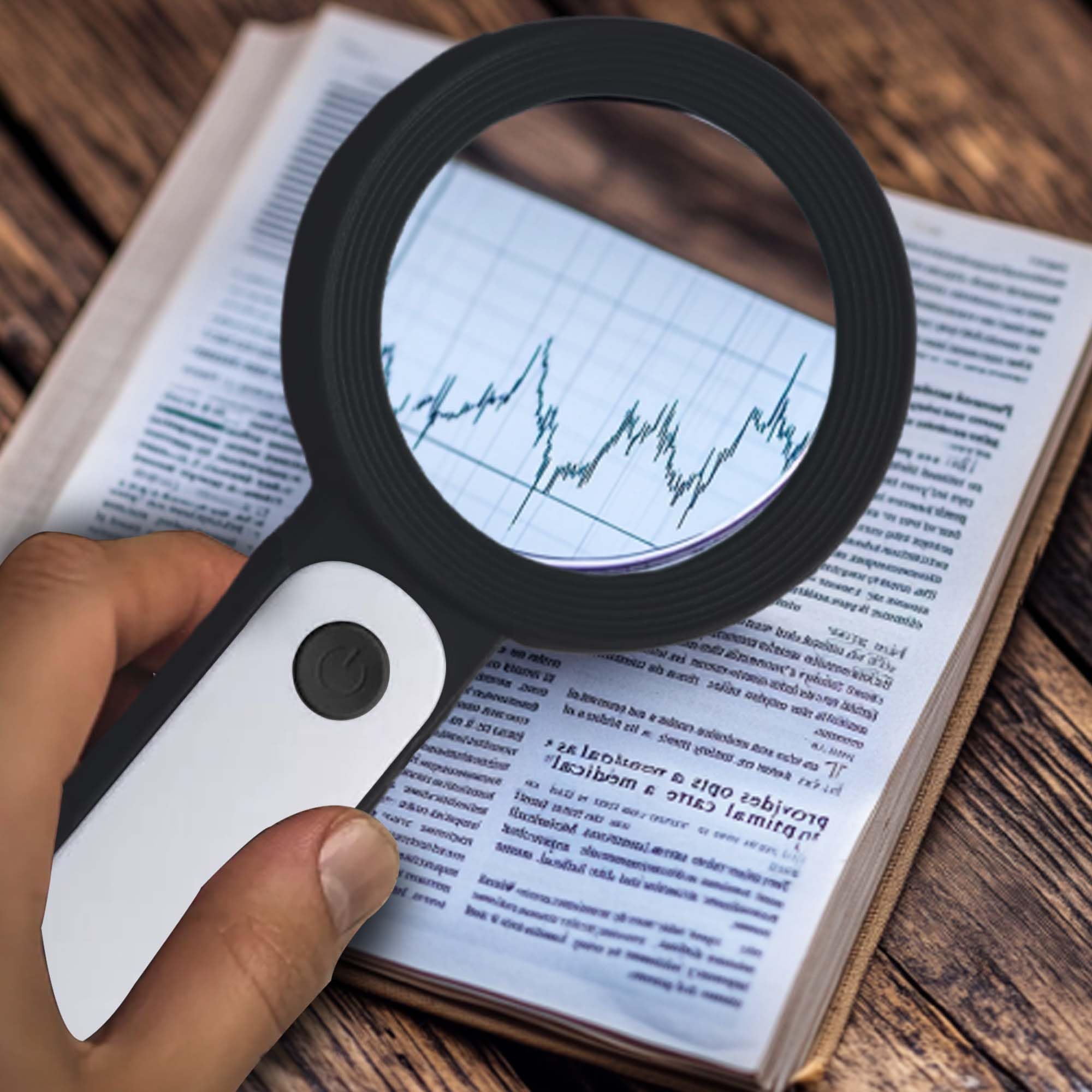 In the year 1021, Ibn al-Haytham published the Book of Optics to explain how light interacts with curved surfaces. — Magnifying Glass with Light, 30X Handheld Large 18LED Cold and Warm Light with 3 Modes — $0.83
Add this to cart.
Optical Performance and Technical Specifications
The device achieves a high-powered magnification through a dual-lens system crafted from high-grade glass. This configuration ensures that minimal distortion occurs even at the extreme edges of the viewing field.
| Technical Attribute | Specific Measurement |
|---|---|
| Magnification Power | 30X |
| Light Source | 18 LED Diodes |
| Lighting Variations | 3 Modes |
| Lens Material | K9 Optical Glass |
| Frame Composition | ABS Polymer |
| Power Requirement | 3 AAA Batteries |
In the year 1021, Ibn al-Haytham published the Book of Optics to explain how light interacts with curved surfaces. His theories allowed European monks to craft the first reading stones for blurry eyes. These primitive tools eventually transformed into the sophisticated handheld instruments we utilize today. The evolution of glass grinding techniques in 13th-century Italy accelerated the production of visual aids for the masses.
Modern LEDs operate on the principles of semiconductor physics discovered during the middle of the 20th century. Nick Holonyak Jr. developed the first practical visible-spectrum diode in 1962 while working at General Electric. This invention replaced the fragile filaments of incandescent bulbs with durable components that emit almost no heat. The integration of these diodes into a magnifying handle provides a constant stream of photons for the reader.
The handle of this magnifier consists of ABS plastic which provides a secure grip for users with limited motor skills. Within this ergonomic shell lies a circuit board that regulates the voltage from the battery compartment. This electronic management prevents the flickering often associated with cheaper optical tools found in hardware stores. The balance of the weight rests comfortably between the palm and the fingertips of the operator.
Amazon customers frequently mention that the toggle switch responds with a satisfying click during operation. They report that the warm lighting mode significantly reduces the glare from glossy magazine pages. Several buyers noted that the high-power lens reveals the intricate textures of postage stamps and historical coins. These accounts confirm that the device maintains its focus without requiring constant adjustment from the viewer.
The Legacy and Evolution of Visual Enhancement Tools
Before the arrival of electricity, scholars relied on the sun or flickering candles to illuminate their manuscripts. The birth of the cold and warm light modes mimics the natural shift of the sun from dawn until dusk. Engineers designed these settings to match the sensitivity of the human eye across various times of the day. Such precision helps individuals with macular degeneration perceive small text with greater ease.
The LED array resides in a circular configuration to eliminate the shadows cast by the hand of the user. This geometric arrangement ensures that light hits the target object from every possible angle simultaneously. By removing shadows, the device allows for a deeper inspection of mechanical parts or biological specimens. The cold light mode specifically highlights the contrast between black ink and white paper.
The Architecture of the Luminescent Lens
Double glass lenses offer a superior experience compared to the plastic acrylic lenses found in many discount shops. Glass remains resistant to scratches and maintains its clarity over many decades of regular use. The dual-layer design corrects the chromatic aberration that often creates colorful fringes around the edges of magnified objects. This clarity remains essential for professionals who examine legal documents or fine jewelry.
The portability of the magnifier permits its use in environments ranging from cluttered workshops to dim library basements. It operates independently of wall outlets which gives the researcher total freedom of movement. Because the lighting system consumes very little energy, a single set of batteries lasts for many weeks of inspection. This efficiency represents a major leap forward from the heavy battery packs used in the previous century.
The Material Science of Precision Optics
The manufacturing process of K9 glass involves a careful balance of silica and boric oxide to achieve high transparency. Workers must cool the molten mixture slowly to prevent the formation of internal bubbles or structural cracks. This glass type serves as the standard for precision optics because of its low refractive index and excellent physical properties for tools that must withstand frequent handling.
Once the glass hardens, machines grind it into the precise convex shape required for high-powered magnification. Behind the assembly of the lighting array lies the science of phosphor coatings which determine the color temperature of the light. Changing the chemical composition of the phosphor allows the manufacturer to offer both cold and warm settings. This versatility serves the needs of different users who may have unique sensitivities to blue or yellow wavelengths.
Inquiries Regarding the Future of Optic Science
- How does the arrangement of 18 LEDs specifically reduce the strain on the human ciliary muscle?
- Why does the use of ABS plastic remain the preferred choice for handheld frames over aluminum or wood?
- In what ways did the discovery of blue LEDs in the 1990s change the design of modern handheld magnifiers?
- How do dual-lens systems minimize the distortion typically found in high-power single lenses?
- What role does the refractive index of K9 glass play in the clarity of the viewed image?
Recommended Reading List:
- The Book of Optics by Ibn al-Haytham
- Nature's Building Blocks by John Emsley
- Opticks by Sir Isaac Newton
- The History of the Telescope by Henry C. King
- LED Lighting: The Science of Light-Emitting Diodes by T. Q. Khan
Down To Business:
* Bright 18LED light enhances visibility * Three distinct modes provide flexibility * Cold and warm light options available * 30X magnification for detailed examination * Portable handheld design for easy use
Get It On Amazon ::: (brought to you by Kiitn)
▷ Add this to cart.
Spotlight Deals Magnifying Glass with Light, 30X Handheld Large 18LED Cold and Warm Light with 3 Modes -53% $0.83 $ 0 . 83
#Ad Our articles include affiliate links: If you buy something through a link, we may earn a commission 💕
[ Purchase details ]


Comments
Post a Comment