Featured Cost $13.99—Artoid Mode Soft Plush Faux Fur Jacquard Pumpkins Fall Table Runner.
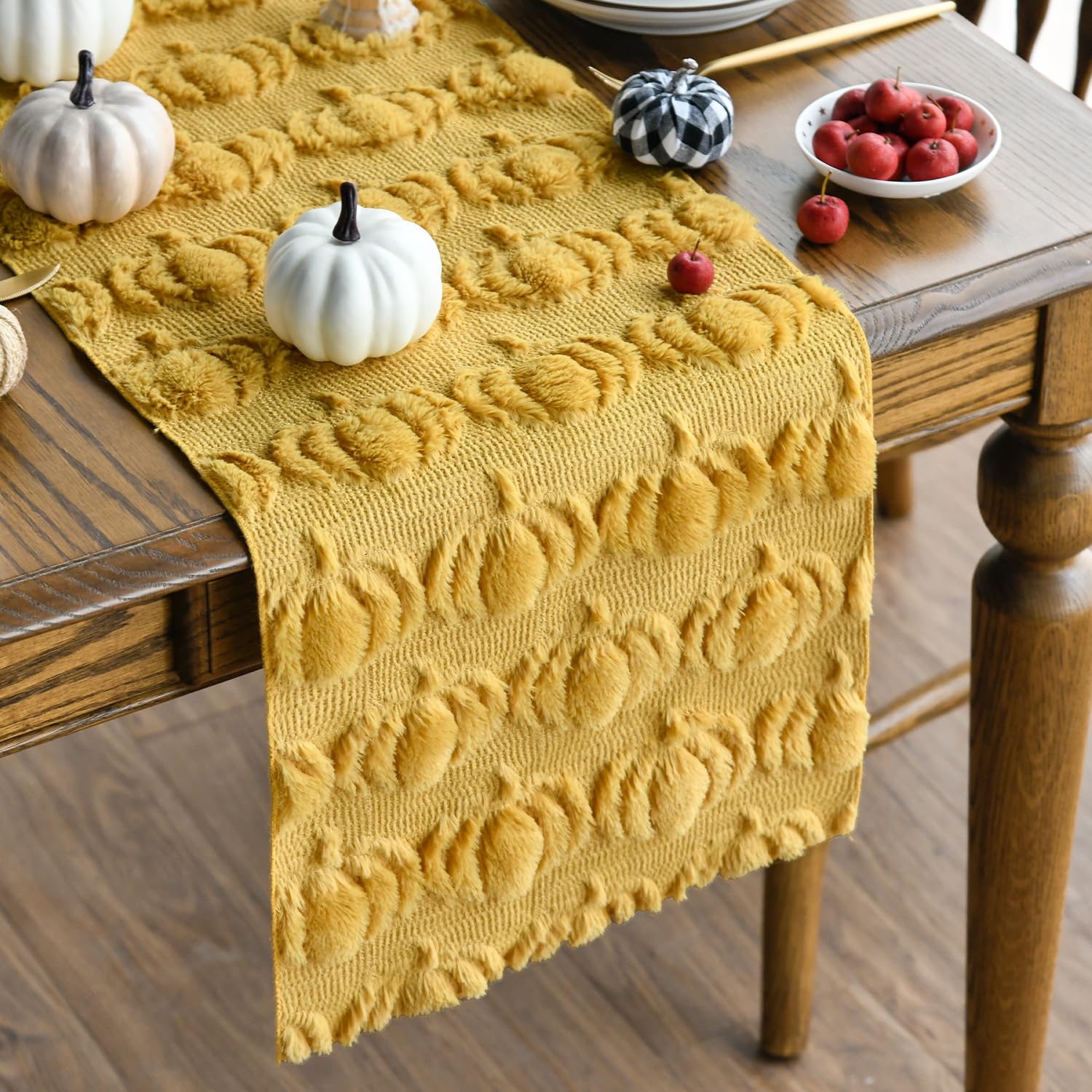 It demands careful handling, yet the resulting drape introduces an airy light filtration into a dining space, transforming ambient illumination without obstructing it. — Artoid Mode Soft Plush Faux Fur Jacquard Pumpkins Fall Table Runner — $13.99
Find out more.
Textural honesty speaks volumes. In the search for textiles that genuinely ground a space, attention shifts immediately from readily manufactured items to artifacts of concentrated labor. Consider the specialized technique of Krokbragd weaving, where the weft threads are packed so densely that the resulting cloth achieves a three-dimensional ribbed surface, generating a tactile topography completely unlike standard plain-weave fabrics. This technique results in textiles that are profoundly weighty and stable, almost functioning as flexible architectural elements rather than simple decoration.
Geometry and Fiber Integrity
The utility of textiles often transcends mere visual aesthetic, embedding complex meaning into geometric arrangements. For instance, the use of Piña fiber, derived from the leaves of the pineapple plant, offers an unexpected material for formal display cloths. This fabric possesses a distinct stiff transparency and a subtle sheen, a natural quality that cannot be replicated by synthetic blends. It demands careful handling, yet the resulting drape introduces an airy light filtration into a dining space, transforming ambient illumination without obstructing it. Such sheer strength is unusual. A textile should offer more than color; it must engage with light.
Another instance of unique structure defining purpose is observed in historical record-keeping textiles. While not traditionally decorative, the ancient Peruvian *quipu*—a system of knotted, colored cords—demonstrates how highly organized fiber geometry can articulate complex information. Modern designers who draw from this rigorous, coded structure utilize hanging cord arrangements to create partitions or backdrops that possess both visual rhythm and historical resonance. This is functional sculpture achieved entirely through tension and knot placement.
The Optical Weight of Weave
Genuine quality is evident in the optical weight a textile carries—the way light interacts with material depth. Flat surfaces often present mere images, yet superior weaving techniques build genuine visual complexity. The traditional double-weave of the Navajo Churro blanket, for example, utilizes two distinct sets of warp and weft, often trapping air and creating pockets of intense color. Depending upon the angle of view, the colors seem to shift and merge, a living quality achieved through painstaking manual labor. A digital print cannot replicate this physical trick of light.
It is critically important to recognize when the texture of a textile is an inherent property of the fiber and technique, and when it is simply a surface application. The lack of three-dimensional integrity diminishes the sensory experience. Textiles crafted with fibers that retain their natural oils, such as certain varieties of silk or specialized wools, possess a nuanced sheen and softness that synthetic substitutes struggle to imitate. These unique materials absorb and reflect light in ways that add visual gravity and undeniable warmth, fundamentally changing the perceived temperature of a room.
Get It On Amazon ::: (brought to you by Kiitn)
▷ Find out more.
Artoid Mode Soft Plush Faux Fur Jacquard Pumpkins Fall Table Runner Price, $13.99 $ 13 . 99
#Ad Our articles include affiliate links: If you buy something through a link, we may earn a commission 💕
[ Purchase Options ]


Comments
Post a Comment