Cost $59.99—Dutch Oven For Sourdough Bread Baking, Enameled Cast Iron Dutch Oven Pot With Lid, Dome-Shaped Bread Dutch Ovens, 6 Qt.
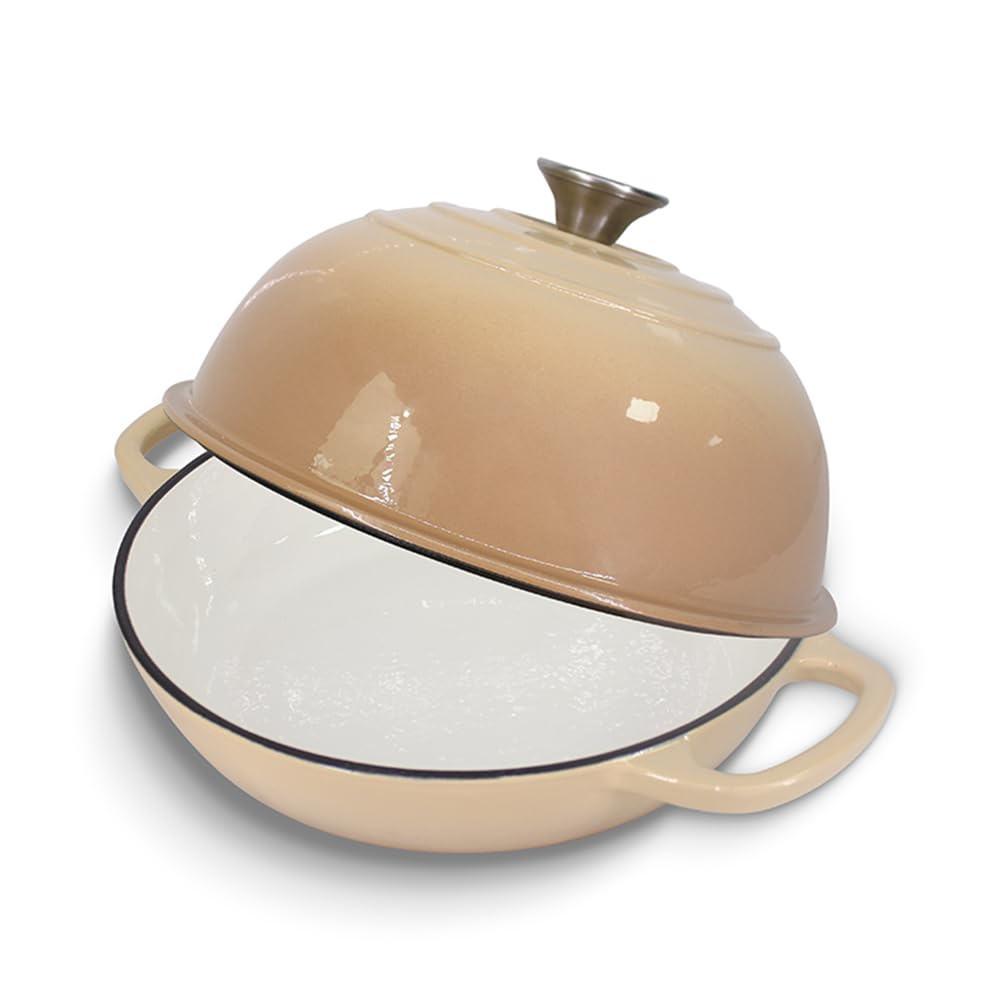 It behaved less like organized mass, more like an ambitious stream. — Dutch Oven for Sourdough Bread Baking, Enameled Cast Iron Dutch Oven Pot with Lid, Dome-Shaped Bread Dutch Ovens, 6 Qt — $59.99
TLDR Check here.
I recall watching a master baker, typically steady, look entirely bewildered by a high-hydration batch of freshly milled Emmer. He tried to score the loaf—the blade simply dragged, the dough refusing to hold the necessary tension. *It behaved less like organized mass, more like an ambitious stream.* That specific moment highlighted the delicate tightrope walk of specialized baking, where the grain, not the baker, ultimately dictates the success of the rise.
The pursuit of texture often leads serious bakers away from standard flours toward grains with challenging, unique protein structures. Consider Einkorn, Triticum monococcum, the oldest cultivated wheat variety. Its gluten network is notoriously fragile, lacking the crucial high molecular weight glutenin subunits found in modern wheat. This fragility requires vastly different handling; extensive kneading destroys the structure, demanding instead a series of gentle folds over several hours. The resulting crumb possesses an uncommonly tender, almost buttery texture, but achieving the necessary oven spring before the dough collapses requires the sudden, fierce heat retention provided by specialized vessels. Spelt, conversely, builds strength quickly but rapidly loses it, leading to a narrow window for shaping.
The hydration required for the best crumb development often confounds expectation. Some high-extraction, stone-milled flours demand water levels exceeding 85 percent, transforming the initial mixture into something resembling thick batter rather than workable dough. This high water content is essential for maximizing gelatinization of the starches inside the oven, yielding that distinctive, glossy interior structure. Yet, shaping such slack dough successfully—creating sufficient surface tension to resist gravity—requires an almost intuitive understanding of friction. *The final product offered a silent, perfect reward.* Furthermore, bakers often encounter the baffling activity of amylase enzymes, particularly prevalent in some heritage grains, which can degrade the dough structure rapidly during a long, cool proofing process. This necessitates meticulous temperature control, measured not in degrees, but in critical half-degrees, to prevent the internal structure from dissolving into an overly sticky mass. This specific attention to enzyme management distinguishes hobby baking from high-level craft.
• The Pumpernickel effect Despite using 100% rye flour, which produces zero traditional gluten, the crumb structure is achieved through pentosans—gummy, hydrophilic carbohydrates—which require acidic conditions to function properly.• Cold-proofing at 39°F Some bakers utilize extremely low temperatures, often below typical refrigeration settings, specifically to maximize the production of acetic acid over lactic acid, fundamentally altering the flavor profile.
• The "Degas and Shape" method After a 24-hour bulk fermentation, some highly elastic doughs are intentionally punched down completely and reshaped, often surprisingly improving the final oven spring by equalizing gas bubbles.
• The use of ‘retardation’ techniques Dough is held at controlled low temperatures for up to 48 hours to intensify specific acidic notes; this process simultaneously degrades some gluten, forcing the need for protective heat encapsulation upon baking.
Get It On Amazon ::: (brought to you by Kiitn)
▷ TLDR Check here.
Dutch Oven for Sourdough Bread Baking, Enameled Cast Iron Dutch Oven Pot with Lid, Dome-Shaped Bread Dutch Ovens, 6 Qt Price, $59.99 $ 59 . 99 - $65.99 $ 65 . 99
#Ad Our articles include affiliate links: If you buy something through a link, we may earn a commission 💕
[ Buy It Here ]


Comments
Post a Comment