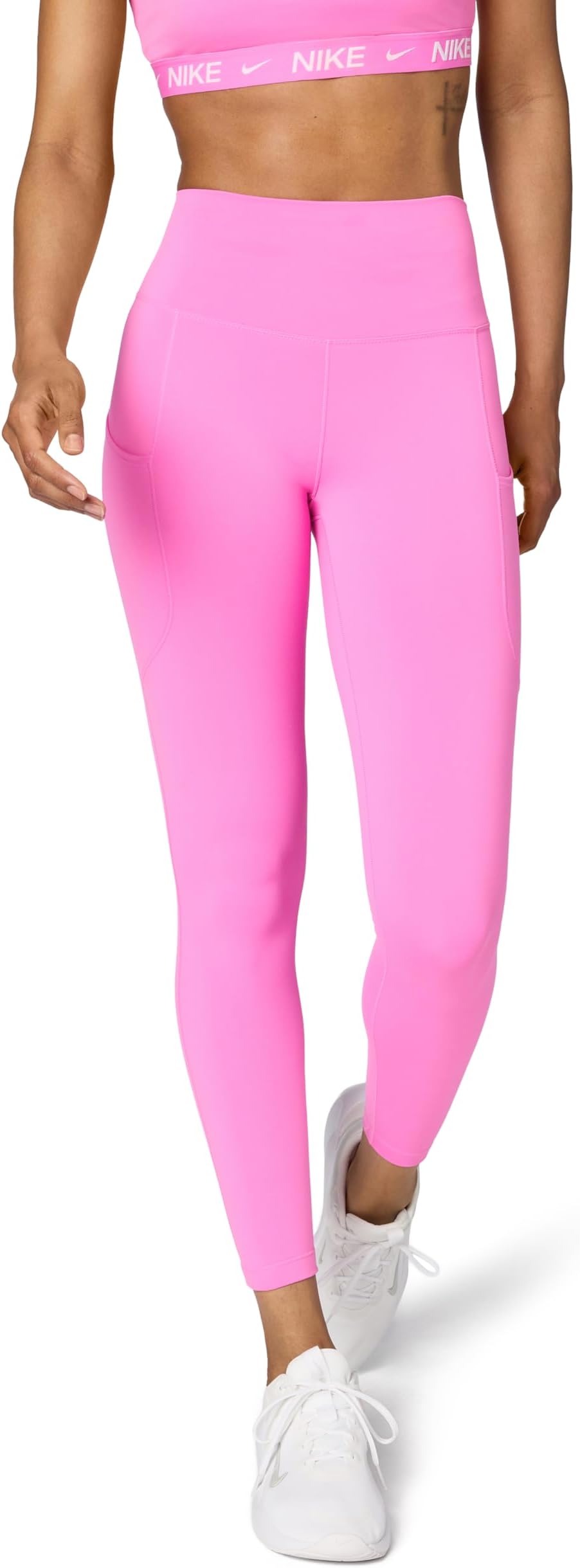
Popular ⋗ Cost #.##—Image Of Nike Women's One High-Waisted 7/8 Leggings.
 Popular ⋗
 Whether you're a seasoned athlete or a fitness enthusiast, the right gear can make all the difference in your performance and confidence. — Image of Nike Women's One High-Waisted 7/8 Leggings — #.##
Get this here.
This struggle, in miniature, captures the enduring tension between form, purported function, and the deeply specific engineering demands placed upon garments designed for sustained, purposeful movement. The pocket's utility was negligible.
The specific capacity of modern performance fabrics, such as those utilized in the Nike one-piece high-waisted construction, owes a debt to materials science innovations that began under highly unlikely circumstances. Consider the elastomeric fiber known generically as spandex (Lycra being the proprietary and highly successful brand name coined by DuPont). Invented by Joseph Shivers in the late 1950s, this material is not just slightly stretchy; it is defined by a molecular architecture—a segmented sub-molecular polyether-polyurea copolymer—that permits it to extend over 500% its original length and recover its shape instantly. This structural reality seems profoundly confusing to anyone accustomed to non-technical fibers that simply tear when overstressed. The entire utility resides in that precise, non-linear deformation curve. Early attempts to achieve this level of dynamic elasticity involved actual rubber, which degraded rapidly when exposed to sweat or detergents. It offered poor breathability. The subsequent development of this synthetic architecture was not a casual fashion choice, but a specific solution to the catastrophic failure points inherent in natural rubberized compression garments.
The high-waisted geometry, currently popular for aesthetic reasons, has a distinctive historical pedigree rooted in utility rather than fashion. Prior to its mainstream athletic adoption, significant internal abdominal support via high, rigid waistlines was primarily seen in garments designed for specific medical or occupational purposes. These were not leisure items. Early iterations of flight suits and, notably, specialized post-operative or orthopedic compression wraps utilized a high rise precisely to distribute tension and maintain pressure across a crucial segment of the torso. This design minimizes shifting during rigorous activity—a technical necessity. The migration of this structured, supportive upper band from being a feature of necessary medical compliance to a voluntary marker of optimized performance wear is a fascinating, if largely unacknowledged, aspect of textile design history. Stress vectors defined the shape.
Perhaps the most critical, yet least discussed, unique element in high-performance leggings is the gusset, that unassuming diamond or triangular piece of fabric usually inserted into the crotch area. This seemingly minor component is a structural triumph, functioning as a deliberate anti-failure mechanism. The alternative construction—simply sewing four seams together at the point of maximum stress—guarantees seam failure during dynamic movements like deep squats or aggressive lunges. The gusset, however, redirects the powerful tension vectors away from the weakest point, allowing the fabric to bear the load uniformly across a specific geometric plane. This element, entirely invisible when the garment is worn as intended, signifies an engineering solution to inherent textile limitations. It is the specific refusal to compromise movement for the sake of simplicity.
Historical Engineering Highlights:
• Elastane's Unstable Origins Before the stability of spandex, early stretch attempts utilized synthetic filaments derived from rubber—prone to breaking down under chlorine exposure, leading to rapid material failure.
• The 500% Rule Spandex must retain the ability to stretch at least 500% and recover completely to be considered high-performance elastane, a molecular necessity codified during its initial development at DuPont.
• The Gusset's Geometric Purpose This diamond insert is a deliberate structural anomaly designed solely to prevent intersectional seam blowout during maximum-range movements.
• Warp Knit vs. Weft Knit Many high-performance textiles like these utilize warp-knit construction (where loops run vertically), which offers significantly less run susceptibility and greater dimensional stability than simpler weft knitting. A durability mandate.
• Medical Migration The initial impetus for high-rise, integrated compression often derived from requirements for circulatory assistance or injury prevention in specialized occupations, migrating slowly into consumer athletics.
Get It On Amazon ::: (brought to you by Kiitn)
▷ Get this here.
Quick look Nike Women's One High-Waisted 7/8 Leggings $ 60 . 00 Add to Cart
#Ad Our articles include affiliate links: If you buy something through a link, we may earn a commission 💕
[ Purchase Options ]


Comments
Post a Comment